※文末にこの文章の英語訳があります。日本以外の方にも読んでいただければ幸いです。 An English translation of this article is available at the end. I hope this reaches readers beyond Japan as well.
言語と言語以外のものの間で
私は、言語学や日本語学を正式に学んだわけではない。放送作家・脚本家としての仕事をしていく中で、どうしても言語と言語以外のものの境目に興味をもった。たとえば「間」や「行間」、「空間」などである。
一方で、悟りの勉強・修行をしていく中で、思考からの解放の大切さに気付き、その思考を構成している要素である言語(とくに、日本人である私は日本語)に興味をもつようになった。
だから、以下に書くことは、言語学や日本語学をちゃんと勉強したものではないものの一見解であり、すでにその分野での研究は進んでいる可能性がある。しかし素人だからこそその人にしか出せない素っ頓狂な視点を持てているかもしれない。
という言い訳を先にしておいて、進めてみる。
日本語の構造と「空」
日本語の構造そのものの中に、「悟り」や「空(くう)」があるのではないかと考えている。
ここでいう「空(くう)」とは、「無」や「有」を止揚する、より上位の概念であり、「悟り」とはその「空」を理解のみならず、身体で感じていることである。
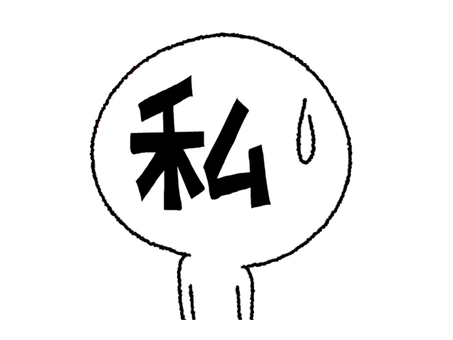
たとえば、日本語では「私」などという主語をあまり使わない。主語がないことが多い。
つまり「私」がない。
それは、「自我」がないとも言い換えることができるのではないか。
「が(我)」の言語学
「自我」とは、「~が」であり、「私が~」、「ぼくが~」、「おれが~」の「が」である。「自我」の「我(が)」と、「私が」「僕が」…と自分を主張するときの助詞の「が」が、同じ音(オン)であるのが面白い。
この「が」は、「あなたが~」、「彼が~」、「彼女が~」、「あいつが~」と他者に乗り移ることもある。「が」を「乗り移す」主体は、「わたしが~」であり、「おれが~」という自我である。
つまり「私が、『が』を他の人に乗り移す」のである。
たとえば、「あいつが、そう言っていた」と言っているのは、「私」である。
「あなた」や「彼」、「彼女」という他人に「が」をつけることによって、自我を持たせる機能を果たす。
それは責任の主体を他の人に押し付けることでもあり、「私」という「自我」と対立する「自我」を外側につくることでもある。
こうして「私」と「彼」が、「私」と「あなた」が対立することにもつながる。
日本語の構造と「和」
それはさておき、私は、日本人が「和をもって貴しとする」というように「和」を大切にしてきたのは、前述したように、日本語の構造そのものの中に、「悟り」や「空(くう)」があるからではないか、と考えている。
一例として、主語をあまりつかわない、主語が見当たらないこともあるのは、それだけ「自我」がうすいわけであり、「自我」にあまり重きを置いていないとも考えられる。
「自我」がないもしくは、「自我」が薄いのは、「空」や「悟り」の一側面である。それが「主語」をあまり使わないという日本語の中に含まれている。
「和」の反対である「対立」とは、「自我」と「自我」のぶつかり合いであり、「自我」がなければ対立のしようがない。
自ずと「対立」が少なくなり、「和」を大切にするようになる。すなわち「和をもって貴し」となる。
SNSを中心とした日本中で起こる対立
「となる」はずである。ところが、今の日本をみると、あちこちで対立がある。おそらくネット上から始まって、リアルにまで波及しているのだろうが、争いはやむことがない。
とくに、日本にインターネットが普及してからの事のように思う。
ネットとは、言葉の空間であり、日本人は日本語の圏内で、お互い対立しあっている。
「おれは、あいつが、ああいったのが許せない」と「自我」は、「が」を他者につけて、「あいつが、〜といった」といって争っている。
それがほんの一部であるならいいが、小さな対立が数知れずあり、日本を二分するような大きな対立も増えているように思える。
構造の中に「悟り」や「空」があり、それゆえに「和をもって貴しとなす」であるはずの日本語を使う日本人がこのありさまである。なんてことだろう・・・。
はたして「わたしが」が増えて争うようになった日本人
昔(太平洋戦争以前)は、日本人は、「私」(僕、拙者など自分を指し示す言葉)を多用しなかったのではないか。現に、現在でも、文章において、「私」を多用した文章は美しくないとされる。
戦後に「私が」が多用されるようになったのではないか。
これは、あくまでも推測ではあるが、日本人が「わたしが」「おれが」「自分が」「ぼくが」という主語を頻繁に使用するようになってから、対立が増えるようになったのではないか。
若い頃、とくに20代の頃から「日本人は主張ができない」と言われているのを聞いてきた。一般論だけではなく、「もっと自分の主張をしなさい。どうして主張しないの」と責め立てられてきたように感じる。
そもそも、個性教育、個性を尊重する、オンリー1になるということも、「わたしが」「おれが」という「が=我」を立てることから始まる。「私=我(が)」があってこその、独自性である。また、社会ではそうとらえられているだろう。(ほんとうの個性は、我を捨てたところに表れる。小林秀雄もそのようことを言っていたが、ここでは語らない。一般的には、「私」を押し出し、表すのが、「個性」であろう)
「私」の多用の原因には、戦後、教育の中に取り入れられた教科「英語」の影響もあるのではないか。
もう一つは、戦後ではないが、明治時代に言文一致の方向に進んで、口語が文章にも使われるようになったことが、戦後にも多大なる影響を与えたと思える。
文語の方が話し言葉よりも一層、主語の省略は明解になるのではないか。簡潔であることを求められるからだ。
言文一致により、文語がどんどん使われなくなったことは、「私」という主語が文章にも話し言葉にも、次第に、以前より多用されるようになった1つの原因になっているのではないか。
「私が」をもはや棄てられない日本人ができること
とくに戦後、主語を多用することを覚え、自我が一層強くなった日本人は、もはや「私が」を棄てることはできないであろう。
しかし、主語を多用しない、「私が」がない良さというものを思い出すことができる。
たとえば、集団行動を重視する日本式経営において構成員である社員は、おそらく「主語」を頻発することは求められなかったし、むしろ嫌われたであろう。
それが、アメリカ式経営が日本に入ってきて、一人一人が「私が」と主張することを求められ、不完全ながらも主張をするようになった。
日本式経営からアメリカ式経営の導入が多くの企業や団体で増加してからと符合するように日本経済は弱くなった。
そこからみても、「主語がない」ことの強みを思い出すことができるだろう。
昭和の家庭をノスタルジックに思い出すだけで、どこか心があたたかくならないか。それからでも、「私が」を主張しないことの良さをなんとなく感じることができる。
主語が少なかった時代を通過した人は思い出すことでその良さを追体験して、その経験がない人は、過去の映画やドラマなどで、感じてみよう。
本が好きな人は、昔の文章や詩歌を読んでみよう。
なによりも、ときどき、今この瞬間に「私を忘れて」みよう。
考えなければいいのだ。一瞬だけでも意識して思考しない。そのときは「私」はいない。身体はあるけれど。(これについての説明は別の稿でしたい。)
ともかく「私が」を立てるから争いが起こるのだということを、ときどき思い出していただきたい。
(END)
Conflict in Japan Increased as Japanese People Started Saying ‘I’
Between Language and What Lies Beyond It
I have not formally studied linguistics or Japanese language studies. However, through my work as a broadcast writer and screenwriter, I became deeply interested in the boundary between language and what lies outside it — concepts such as ma (間, pause/space), gyōkan (行間, reading between the lines), and kūkan (空間, space itself).
At the same time, through my study and practice of satori (enlightenment), I came to recognize the importance of liberation from thought — and this led me to take a keen interest in language itself, as the very substance from which thought is constructed. In particular, as a Japanese person, I became fascinated with the Japanese language.
What follows is therefore not the view of someone who has rigorously studied linguistics or Japanese language — it is one layperson’s perspective, and research in this field may well have already advanced far beyond what I write here. Yet perhaps it is precisely because I am an amateur that I can offer a somewhat eccentric viewpoint that no specialist would think to express.
With that caveat offered in advance, let us proceed.
The Structure of Japanese and Kū (空)
I have come to believe that within the very structure of the Japanese language, there exists something akin to satori (enlightenment) and kū (空, emptiness/void).
The kū I refer to here is not simply “nothingness.” It is a higher-order concept that transcends — and reconciles — both “nothingness” (mu) and “existence” (u). And satori is not merely an intellectual grasp of this kū; it is to feel it in one’s very body.
Consider, for instance, how in Japanese the subject “I” (私, watashi) is rarely used. Often, there is no subject at all.
In other words: there is no “I.”
Could this not be rephrased as the absence of jiga — the ego, the self?
The Linguistics of Ga (我)
Jiga (自我, ego/self) is essentially the ga — the “ga” in “watashi ga” (I [subject marker]), “boku ga,” “ore ga.” It is fascinating that the ga in jiga (the character 我, meaning “self”) and the grammatical particle ga (が) used when asserting oneself — as in “watashi ga” or “boku ga” — share the same sound (on).
This ga can also be transferred onto others: “anata ga” (you [subject marker]), “kare ga” (he), “kanojo ga” (she), “aitsu ga” (that person). The subject that “transfers” the ga onto others is the ego — “watashi ga,” “ore ga.”
In other words: “I transfer ‘ga’ onto the other person.”
For example, when one says, “Aitsu ga, sō itte ita” (“That person said so”), the one speaking is “I.” By attaching ga to another person — “anata” (you), “kare” (he), “kanojo” (she) — one grants that other person the function of being an ego-bearing subject.
This is also a way of pushing the locus of responsibility onto someone else — and it creates, outside of oneself, an ego (自我) that stands opposed to one’s own ego (“私”).
And so, “I” and “he,” “I” and “you” come to stand in opposition.
The Structure of Japanese and Wa (和, Harmony)
Setting that aside for a moment — I believe the reason the Japanese people have long cherished wa (和, harmony), as expressed in the saying “Harmony is to be valued” (和をもって貴しとする), is precisely because, as I described above, the very structure of the Japanese language contains within it something of satori and kū.
As one example: the tendency not to use subjects, or for subjects to simply disappear from sentences, reflects a thinness of jiga — the ego — and can be understood as placing relatively little weight on the self.
The absence or thinness of ego is one aspect of kū and satori. And this is embedded within the Japanese language’s characteristic reluctance to use subjects.
The opposite of wa (harmony) is tairitsu (対立, conflict). Conflict is, at its core, the collision of one ego against another. Where there is no ego, there can be no conflict. Conflict naturally diminishes; the valuing of harmony naturally emerges. Hence: “Harmony is to be valued.”
Conflict Spreading Across Japan — Centered on Social Media
That is how things ought to be. Yet looking at Japan today, conflict is everywhere. It likely began in the online world and has spilled over into the real — the quarreling never ceases. It seems to have accelerated particularly since the internet became widespread in Japan.
The internet is a space made of words. And Japanese people, within the sphere of the Japanese language, are clashing with one another. “I cannot forgive that person for saying that” — the ego attaches ga onto others, declares “that person said such-and-such,” and fights.
If this were only a small part of society, it might be tolerable. But there are countless small conflicts, and it seems as though large-scale conflicts — ones that divide Japan in two — are also on the rise.
The structure of the language contains satori and kū — and therefore should produce “Harmony is to be valued.” Yet this is the state of the very people who use that language. How remarkable…
And So: The Japanese Who Began to Fight as “Watashi Ga” Increased
In the old days — before the Pacific War — Japanese people likely did not overuse “watashi” (or “boku,” “sessha,” and other words referring to oneself). Even now, a piece of writing that overuses “watashi” is considered inelegant.
I suspect it was after the war that “watashi ga” came to be used more frequently.
This is speculation, but: it may be that conflict increased as Japanese people began to frequently use subjects like “watashi ga,” “ore ga,” “jibun ga,” “boku ga.”
Since I was young — particularly in my twenties — I heard repeatedly that “Japanese people can’t assert themselves.” Not just as a general observation: I felt personally pressured, told “You need to assert yourself more. Why don’t you speak up?”
At its root, the ideals of individuality education — respecting individuality, becoming “only one” — all begin from raising up the ga (我, self): “watashi ga,” “ore ga.” It is the “I = ego (ga)” that makes uniqueness possible. That is, at least, how it tends to be understood in society. (True individuality, I believe, emerges when the self is relinquished — Kobayashi Hideo said something to that effect — but I will not pursue that here. In common usage, expressing and pushing forward the “I” is what we call “individuality.”)
Among the causes of this increased use of “watashi,” I would suggest the influence of English — introduced into the postwar educational curriculum as a subject.
Another factor, though predating the postwar era, is the movement in the Meiji period toward genbun-itchi (言文一致) — the unification of written and spoken language — which brought colloquial expression into written prose. This had a profound influence that continued into the postwar period. In classical written Japanese (bungo), the omission of subjects is even cleaner and more apparent, because brevity is demanded. The gradual disappearance of bungo through genbun-itchi may have been one cause of the progressive increase in the use of “watashi” as a subject — in both written and spoken language.
What Can Japanese People Do, Now That They Can No Longer Abandon “Watashi Ga”?
Particularly since the postwar period, Japanese people have learned to use subjects frequently, and the ego has grown stronger. It is probably no longer possible to simply abandon “watashi ga.”
And yet — we can still remember the goodness of not using subjects, the goodness of a world without “watashi ga.”
For instance: in Japanese-style management, which emphasizes collective action, employees as members of the group were probably not expected to assert “I” frequently — and likely would have been disliked for doing so. Then American-style management arrived in Japan, and individuals began to be expected to assert “watashi ga” — however imperfectly.
And notably, the weakening of the Japanese economy seems to coincide with the widespread adoption of American-style management in many companies and organizations. From this, too, we can glimpse the strength that came from the absence of subjects.
Even simply recalling the Shōwa-era household with nostalgia — doesn’t your heart warm a little? That warmth itself carries a faint sense of the goodness of not asserting “watashi ga.”
Those who have lived through the era when subjects were fewer — recall it, and revisit that goodness through memory. Those who did not live it — try to feel it through old films and dramas. Those who love books — read old literature and poetry.
Above all else: from time to time, in this very moment, try “forgetting the I.”
There is no need to think. For just one instant, consciously cease to think. In that moment, there is no “I.” The body remains — but the I does not. (I would like to explore this further in a separate piece.)
In any case — please remember, from time to time: it is the raising up of “watashi ga” that gives rise to conflict.
(END)
 Shinpi Me